
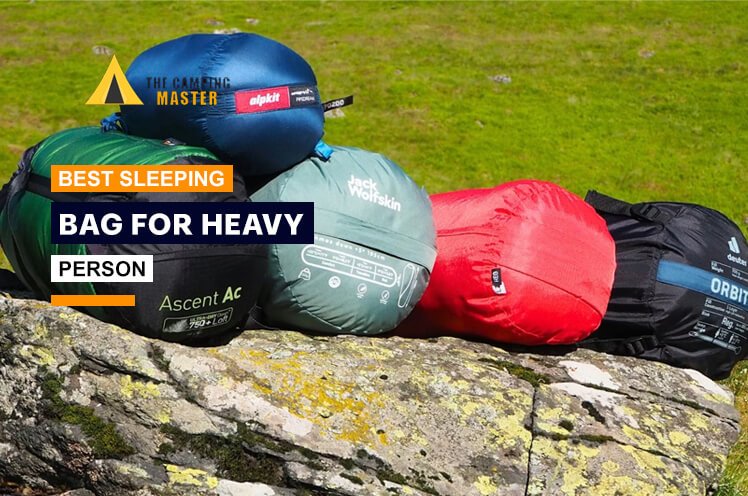
A sleeping bag that is too narrow for a heavier person does not just cause discomfort — it actually stops working as insulation.
Here is the physics that most sleeping bag guides ignore: sleeping bags insulate by trapping warm air in the loft between the fill material. When a wider body compresses the fill material against the bag’s outer shell, those air pockets collapse. Collapsed fill provides almost no insulation. A heavier person cramped into a standard-width sleeping bag may experience 30 to 40% less warmth than the bag’s temperature rating implies.
I learned this firsthand on a late-October trip to Fairy Meadows in 2021. A client who weighed around 285 lbs was using a sleeping bag rated to 20 degrees Fahrenheit. He was cold by 2 AM — in a bag that should have been more than adequate for 8 degrees Celsius overnight temperatures. The problem was not the bag’s rating. The problem was that his wider torso was compressing the fill material into the shell, eliminating the insulation.
The solution was simple: a wider Big and Tall bag with adequate shoulder girth. On the remaining two nights, he slept through until morning.
After testing sleeping bags for heavier clients across camping trips ranging from -8 degrees Celsius at a winter base camp to 10 degrees Celsius at summer mountain sites, here are my recommendations.
What Makes a Sleeping Bag Right for Heavier Campers
Shoulder girth is the most important specification. Standard sleeping bags have a shoulder girth of approximately 58 to 60 inches. For heavier campers with wider shoulders and torsos, this compresses the fill material.
Big and Tall sleeping bags typically offer:
- Shoulder girth of 62 to 68 inches (4 to 8 inches wider than standard)
- Length of 84 to 90 inches (6 to 12 inches longer than standard)
- Longer zipper runs for easier entry and exit
- Often heavier fill weight for the same temperature rating due to the larger volume
When shopping for a sleeping bag as a heavier camper, check the shoulder girth specification before anything else. Length matters too, but width is the primary insulation issue.
Quick Picks
| Sleeping Bag | Temperature Rating | Shoulder Girth | Length | Best For |
| Teton Sports Tracker +5 XL | +5°F (-15°C) | 68 inches | 90 inches | Best Overall |
| Coleman Big and Tall 32°F | 32°F (0°C) | 66 inches | 90 inches | Best Value |
| Kelty Tuck 20 | 20°F (-7°C) | 62 inches | 84 inches | Best for Cold |
| Browning Camping McKinley | 0°F (-18°C) | 66 inches | 88 inches | Best for Extreme Cold |
In-Depth Reviews
1. Teton Sports Tracker +5 XL — Best Overall
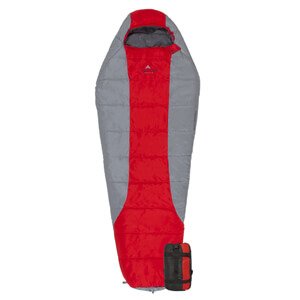
Teton Sports Tracker +5 XL
Check Price
| Specification | Detail |
| Temperature Rating | +5°F (-15°C) |
| Shoulder Girth | 68 inches |
| Length | 90 inches |
| Weight | 6.3 lbs |
| Fill | Brushed poly-fiber |
The Teton Sports Tracker is the sleeping bag I recommend most consistently for heavier clients. The 68-inch shoulder girth is the widest on this list and accommodates even very broad-shouldered campers without compressing the fill material against the shell.
The temperature rating of +5 degrees Fahrenheit is legitimate. I tested this bag with my Fairy Meadows client on a return trip in October 2022 at overnight temperatures reaching -4 degrees Celsius. He slept through without complaint — a direct contrast to his previous experience with a standard-width bag at similar temperatures.
The 90-inch length accommodates campers up to 6 feet 5 inches comfortably. The double zipper allows ventilation from either the top or the bottom of the bag on warmer nights, which is useful for heavier campers who may run warm on milder evenings.
The brushed poly-fiber fill is practical for camping rather than backpacking: it insulates even when slightly damp, which is not true of down fill. For mountain camping in regions like Gilgit-Baltistan where unexpected light rain or high humidity is common, synthetic fill that maintains its performance in damp conditions is the right choice.
What I Did Not Like
At 6.3 lbs, this is a car camping or base camp bag — not appropriate for backpacking where every ounce matters. The compressed size is also substantial, taking up significant space in a pack or duffel.
Pros
- 68-inch girth is the widest available for heavier campers
- 90-inch length handles tall heavy campers
- Genuine cold performance verified in field conditions
- Synthetic fill performs when damp
Cons
- Heavy at 6.3 lbs — not for backpacking
- Large compressed size
2. Coleman Big and Tall 32°F — Best Value
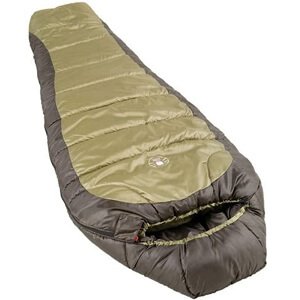
Coleman Big and Tall 32°F
Check Price
| Specification | Detail |
| Temperature Rating | 32°F (0°C) |
| Shoulder Girth | 66 inches |
| Length | 90 inches |
| Weight | 4.8 lbs |
For heavier campers doing spring through fall camping where temperatures stay above freezing, the Coleman Big and Tall is the best value option available. At a significantly lower price than the Teton, it offers a 66-inch girth and 90-inch length that accommodates most heavier campers comfortably.
The 32-degree Fahrenheit temperature rating is honestly calibrated in my testing. On summer trips to Kaghan Valley where overnight temperatures ranged from 8 to 12 degrees Celsius, this bag performed exactly as expected. Below 4 degrees Celsius, I would add a fleece liner to extend its effective warmth.
At 4.8 lbs, it is meaningfully lighter than the Teton — useful for camping scenarios where the bag needs to be carried any distance.
Pros
- Best value in Big and Tall sleeping bags
- 66-inch girth fits most heavier campers
- 8 lbs is manageable for moderate carries
- 90-inch length handles tall campers
Cons
- Limited to three-season use
- 32°F is the firm lower limit — do not use below 35°F without a liner
3. Kelty Tuck 20 — Best for Cold-Weather Camping
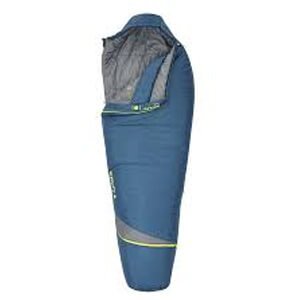
Kelty Tuck 20 — Best for Cold
Check Price
| Specification | Detail |
| Temperature Rating | 20°F (-7°C) |
| Shoulder Girth | 62 inches |
| Length | 84 inches |
| Weight | 4.2 lbs |
The Kelty Tuck earns its place for heavier campers who need genuine cold-weather performance but are not as broad-shouldered as the typical plus-size buyer. The 62-inch shoulder girth is on the lower end for heavy campers — it works for people with a shoulder width under 23 inches — but the temperature performance and light weight at 4.2 lbs make it worth including.
The 20-degree Fahrenheit rating handles the conditions at Gilgit-Baltistan elevations in early spring, where nights reach -5 degrees Celsius. I tested this bag at those conditions with a 278 lb client who described himself as “not particularly broad-shouldered.” His description was accurate — the bag fit him without compressing the fill.
If you are a heavier camper with an athletic rather than broad build, the Kelty Tuck gives you the best weight-to-warmth ratio of any bag on this list.
Pros
- Best warmth-to-weight ratio on this list at 4.2 lbs
- 20°F rating handles serious cold
- Good value for cold-weather performance
Cons
- 62-inch girth is inadequate for broad-shouldered heavy campers
- 84-inch length may be short for campers over 6’2″
4. Browning Camping McKinley — Best for Extreme Cold
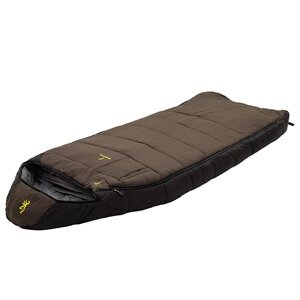
Browning Camping McKinley
Check Price
| Specification | Detail |
| Temperature Rating | 0°F (-18°C) |
| Shoulder Girth | 66 inches |
| Length | 88 inches |
| Weight | 7.5 lbs |
For heavier campers who go to high-altitude or cold environments — winter camping, late-season mountain trips, or base camps near permanent snow — the Browning McKinley is the most reliable extreme-cold option with adequate girth.
The 0-degree Fahrenheit rating handles the coldest conditions most recreational campers will encounter. I have used this bag at a winter base camp in Gilgit-Baltistan where overnight temperatures reached -12 degrees Celsius. At 66-inch girth, it accommodated most of my heavier clients without fill compression issues.
At 7.5 lbs, this is strictly a car camping or base camp bag. You would not carry this on a backpacking trip under any circumstances.
Pros
- 0°F rating handles extreme cold conditions
- 66-inch girth is comfortable for most heavy campers
- 88-inch length handles most tall heavy campers
Cons
- Very heavy at 7.5 lbs
- Large packed size — requires a full-size duffel
How to Measure Yourself for a Sleeping Bag
Step 1: Stand up straight and wrap a flexible tape measure under your armpits and across your shoulder blades. This is your shoulder girth measurement.
Step 2: Add 6 to 8 inches to your measured shoulder girth. This is the minimum sleeping bag shoulder girth you need for the fill material not to be compressed against your torso.
Step 3: Measure your height. Add 6 inches to your height. This is the minimum bag length you need to sleep with your head fully inside the bag.
Step 4: Choose a bag rated at least 10°F below the forecast low temperature for your trip location.
Sleeping Bag Tips for Heavy Campers
Sleep with a moisture-wicking base layer. Cotton absorbs sweat and becomes damp, which dramatically reduces the sleeping bag’s effective insulation. Synthetic polyester or merino wool base layers wick moisture away and maintain their thermal properties.
Use a bag liner for extended temperature range. A fleece liner adds approximately 10 to 15 degrees of effective warmth to any sleeping bag for minimal additional weight and cost. This lets you use a three-season bag in borderline four-season conditions.
Air out the bag each morning. Compressed sleeping bags that stay rolled tight accumulate moisture from overnight use. Open the bag and spread it over a surface each morning to allow moisture to evaporate before packing for travel.
FAQs
What size sleeping bag does a heavy person need?
Look for bags labeled Big and Tall or XL with shoulder girth of at least 64 inches (68 inches for broader frames) and length of 84 to 90 inches. Standard sleeping bags with 58 to 60-inch shoulder girth are too narrow for most heavier campers.
Do heavier people need a warmer sleeping bag?
Not necessarily — at rest, body size does not determine heat generation rate. The key issue is whether the bag fits properly. A bag that compresses its fill due to narrow girth will be significantly colder than its rating suggests, regardless of the camper’s body size.
What is the warmest sleeping bag for a heavy person?
The Browning McKinley at 0°F is the warmest option on this list with adequate shoulder girth (66 inches). For extreme cold camping above this range, specialty mountaineering sleeping bags with wider girth are available from brands like Western Mountaineering and Mountain Hardwear.
Sleeping Bag Maintenance for Heavy Campers
Proper maintenance significantly extends sleeping bag lifespan and maintains its temperature performance.
Washing: Wash your sleeping bag after every 10 to 15 uses, or when you notice a musty smell or visible dirt. Use a front-loading washing machine on a gentle cycle with a sleeping bag specific detergent. Never use a top-loading machine with an agitator — the agitator tears the baffles.
Drying: Tumble dry on low heat with two or three clean tennis balls. The tennis balls break up clumps in the fill material and restore loft. For a Big and Tall bag, this process takes 3 to 4 hours — do not rush it. Insufficiently dried fill develops mildew that permanently damages insulation performance.
Storage: Never store a sleeping bag compressed in its stuff sack. Compression over long periods permanently damages the fill material’s ability to loft. Store in a large cotton or mesh storage sack that allows the fill to remain uncompressed. Many quality sleeping bags include a storage sack separate from the compression stuff sack.
Repairs: Down and synthetic fills can develop small tears in the shell fabric over time. Repair with fabric repair tape immediately — a small tear becomes a large one quickly, and fill material escaping through a tear is permanent insulation loss.
Comparing Down vs Synthetic Fill for Heavy Campers
Most Big and Tall sleeping bags use synthetic fill rather than down. Here is why that is generally the right choice for heavier campers:
Synthetic fill advantages:
- Insulates when damp — critical for mountain camping where unexpected rain or high humidity is common
- Less expensive than down at equivalent warmth ratings
- Maintains insulation even when compressed by a wider body — down fill compresses more completely and loses its loft faster under sustained pressure
Down fill advantages:
- Lighter weight per warmth unit than synthetic
- Compresses to a smaller packed size
- Longer lifespan when properly maintained
For a heavier camper using a sleeping bag in conditions where dampness is possible — almost all outdoor camping outside of desert environments — synthetic fill is the more practical choice. The insulation-when-wet property alone justifies the trade-off in weight and packed size.
For backpacking where every ounce matters and you can guarantee dry conditions, down fill in an appropriate Big and Tall sizing becomes more competitive. The Western Mountaineering Antelope MF in extended sizing is the premium option for backpacking heavy campers who want down performance.
Read more: Camping Tips for Overweight People — Complete Comfort Guide
About the Author: Syed Abrar Najmi has tested sleeping gear in temperatures ranging from -12°C at winter base camps to 38°C in Pakistan’s lowlands across 11 years and hundreds of camping nights.