
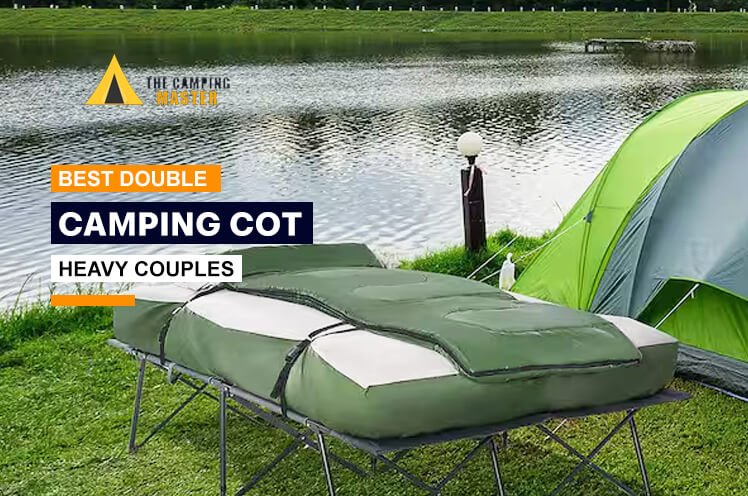
One of the most common questions I get from couples planning their first camping trip together is about sleeping arrangements when both partners are on the heavier side.
Standard double air mattresses deflate under sustained heavy combined weight. Standard double cots either do not exist at adequate capacity or are built for lighter weights. Two single cots pushed together create a gap in the middle that makes them more irritating than sleeping separately — and neither partner can roll toward the center without dropping into the gap.
I have helped dozens of couples solve this specific problem over eleven years of guiding camping trips through Pakistan’s mountain regions, from Fairy Meadows to Hunza Valley to Skardu. Here are the solutions that actually work in the field, not just in theory.
Understanding the Challenge for Heavy Couples
Before getting to product recommendations, it helps to understand why this is a genuinely difficult gear problem.
A couple with combined weight of 450 to 600 lbs needs a sleeping system that meets several requirements simultaneously:
- **Weight capacity:** Enough total capacity for both partners with a safety margin
- **Width:** Enough surface area that both partners can sleep comfortably
- **Stability:** A shared sleeping platform must not tip when one partner moves
- **Entry and exit:** Both partners need to be able to get in and out independently
Most products fail on at least one of these dimensions. An air mattress might have enough capacity but deflate from repeated use. Two single cots might have enough total capacity but the gap makes them unusable as a shared surface.
The Three Practical Solutions
Option 1: Disc-O-Bed XL System (Best Overall Solution)
| Feature | Detail |
| Weight Capacity | 500 lbs combined |
| Width in Double Config | 60 inches |
| Length | 80 inches |
| System Weight | 22 lbs |
| Frame | Aircraft-grade aluminum |
| Price Range | $$$ |
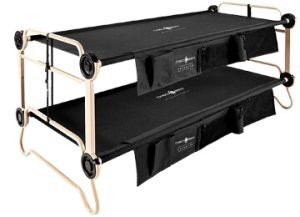
The Disc-O-Bed XL is the product I recommend most often for heavy couples. It is a modular bunk system: two identical cots that can stack vertically as a bunk bed or be placed side by side as a double sleeping platform.
In double configuration, the two 30-inch cots push together and lock to create a 60-inch wide sleeping surface. This is wider than a standard double bed. The connection system that locks the cots together is the critical feature — it prevents the two cots from separating during the night, which eliminates the gap problem entirely.
The 500 lb combined capacity works out to 250 lbs per cot. For couples where both partners are under 240 lbs, this is reliable. The aircraft-grade aluminum frame is extremely rigid — I have put this system through repeated field tests and the frame shows no flex even at combined loads approaching 450 lbs.
My Field Experience
I brought this system on a 5-night trip to Hunza Valley in the fall of 2022. The couple I set it up for — she is around 195 lbs, he is around 285 lbs — used the double configuration throughout the trip. On the first night, he was skeptical about the connection system staying engaged. By morning, both cots were in exactly the same position they had been in when set up. That was the end of his skepticism.
For couples where one partner is significantly heavier than 250 lbs, I recommend checking the individual cot rating (250 lbs per cot) and ensuring the heavier partner’s weight falls within it rather than the combined rating.
Setup Notes
The 10-minute setup is the longest on this list and requires careful alignment of the bunk connection tubes. I strongly recommend assembling this system at home at least once before a camping trip, so the process is familiar when you are doing it in fading daylight at a campsite.
Pros
- 60-inch combined width — genuinely spacious double sleeping surface
- Aircraft aluminum frame is extremely rigid and durable
- Converts between bunk bed and double configurations
- Side organizer bags on both frames are practically useful
- Locks together securely — no gap issue
Cons
- Most expensive on this list
- 10-minute setup requires practice
- 80-inch length may be short for couples where one partner exceeds 6 feet 2 inches
Option 2: Two Teton Sports Outfitter XXL Cots Side by Side
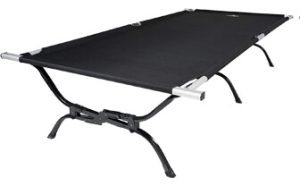
For couples where one partner is over 300 lbs, I recommend two separate Teton Sports Outfitter XXL cots placed side by side rather than a shared system.
The engineering reason: shared sleeping systems distribute weight across a single structure. When one partner weighs significantly more than the other — say, 200 lbs and 350 lbs — the asymmetric loading stresses the connection joints in ways shared systems are not designed to handle optimally.
Two Teton XXL cots placed side by side give each partner completely independent weight support rated to 600 lbs each. The combined sleeping surface is 80 inches wide (two 40-inch cots). The matching 17-inch height means the transition between the two cots is smooth.
Bridging the Gap
The one limitation of this approach is the gap between the two cots. In my experience, the gap between two adjacent cots is typically 2 to 3 inches — noticeable but not prohibitive. Several practical solutions work well:
- A foam pool noodle cut to 80 inches placed in the gap — it fills the space and prevents the “falling into the crack” sensation
- A rolled sleeping bag or extra blanket laid lengthwise in the gap
- A specific gap filler product designed for twin beds (these also work between camping cots)
Most couples adapt to the minor gap within the first night and find it a non-issue after that.
Why This Works Better for Mixed-Weight Couples
On a shared system, if one partner moves forcefully — sitting up suddenly, rolling over quickly — that movement transfers directly to the other partner through the shared frame. On two separate cots with the gap bridged, each partner’s movements are almost entirely isolated. This makes for significantly better sleep quality when one partner is a restless sleeper.
Pros
- Each partner gets full 600 lb capacity independently — no shared weight load
- 40-inch width per cot means both partners sleep on generous individual surfaces
- No limitation on individual partner weight as long as each is under 550 lbs
- Movement isolation means restless sleepers do not disturb each other
Cons
- More expensive than the Disc-O-Bed (two Teton cots cost more than one Disc-O-Bed system)
- Gap between cots requires a bridging solution
- Two cots take more floor space than the Disc-O-Bed in double config
Option 3: Coleman ComfortSmart Deluxe Double (Budget Option for Lighter Couples)
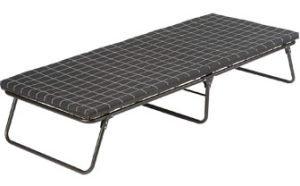
Coleman ComfortSmart Deluxe Double
Check Price
For couples where both partners are under 260 lbs, the Coleman double cot is a budget-friendly option worth considering. It offers 300 lbs per side with coil spring suspension for both sleepers.
I need to be direct about the weight limitation: if either partner is over 265 lbs, this is not the right cot. The safety margin disappears at that weight and the joint degradation I described in the Coleman vs Teton comparison applies equally here.
For two campers genuinely under 260 lbs each who want a budget double sleeping solution with spring comfort, the Coleman works adequately for occasional camping.
Pros
- Most affordable double option
- Coil spring comfort for both sleepers
- Standard setup time
Cons
- 300 lb per side is a firm limit — do not exceed 260 lbs per person
- Narrower than the Disc-O-Bed or two Teton XXLs
Tent Sizing for Heavy Couples With a Double Cot
Most camping guides do not address this, but tent selection is just as important as cot selection for heavy couples.
Space calculations:
The Disc-O-Bed in double configuration: approximately 60 inches wide by 80 inches long. Add 12 inches on each accessible side for movement space. Minimum tent interior needed: 84 inches wide and 92 inches long — roughly 54 square feet of floor space just for the sleeping setup.
Two Teton XXL cots side by side: 80 inches combined width by 85 inches long. With movement space: 104 inches wide by 97 inches long — approximately 70 square feet just for the cots.
In practice, this means:
- Disc-O-Bed system: minimum 6-person tent, 8-person is more comfortable
- Two Teton XXL cots: minimum 8-person tent, 10-person is comfortable
The “person” rating on tents is notoriously optimistic. A “6-person tent” offers roughly 60 to 80 square feet of floor space, which is adequate for the Disc-O-Bed but tight for two full-size XXL cots.
Peak height: Look for a minimum 5.5 feet of peak height. Heavier couples maneuvering around large cots in a tent need to be able to sit or semi-stand without hitting the ceiling.
Tips for Couples Camping Together When One or Both Partners Are Heavier
Test the sleeping setup at home first. Set up whatever configuration you are planning in your living room or backyard. Actually sleep on it for one night. A camping trip is not the right time to discover that a gap filler does not work or that the cot connection system is too complicated to set up in the dark.
Agree on sleep positions before the trip. If one partner is a restless sleeper and the other needs stillness to sleep, two separate cots with independent movement isolation is genuinely preferable to a shared system.
Bring individual sleeping bags, not a double sleeping bag. Shared sleeping bags restrict movement for larger campers and do not provide even thermal coverage across different body sizes. Individual bags — each rated appropriately for the person using it — sleep significantly better.
Plan your tent entry order. On shared sleeping systems, the partner who sleeps on the inside should enter the tent first and slide to their position. The outside partner enters second and does not have to climb over the other.
FAQs
What is the best camping cot for two heavy people?
The Disc-O-Bed XL in double configuration is the best single-product solution for couples where both partners are under 240 lbs each. For couples where one partner exceeds 300 lbs, two separate Teton Sports Outfitter XXL cots placed side by side is the more reliable approach.
Can heavy couples share a camping cot?
Shared camping systems rated for two people are typically rated for a combined weight of 400 to 500 lbs. If both partners’ combined weight exceeds this with a safety margin, shared cots are not safe. Two separate heavy-duty cots are the safer and often more comfortable choice.
How big a tent do heavy couples need with a double cot?
Minimum 6-person tent for the Disc-O-Bed system, minimum 8-person tent for two Teton XXL cots side by side. The person rating on tents is generous — buy two size categories above what you would normally choose.
What is the weight limit for the Disc-O-Bed XL?
500 lbs combined weight, or 250 lbs per individual cot. For a couple where combined weight is under 480 lbs (with a safety margin), the Disc-O-Bed is appropriate. Above that combined weight, two Teton XXL cots are the better solution.
How do I deal with the gap between two separate cots?
A foam pool noodle cut to the length of the cots placed in the gap is the most practical solution. It is inexpensive, lightweight, and eliminates the sensation of falling into the crack when rolling toward the center.
Quick Summary: What to Prioritize First
After helping hundreds of campers of all sizes, my consistent advice for first-time heavier campers: start with the cot and the camp chair. These two pieces directly affect physical comfort and safety. Get those right first and everything else is manageable.
The tent and sleeping bag matter too, but a slightly undersized tent is uncomfortable rather than dangerous. An undersized cot or chair is a safety risk. Prioritize in that order, then upgrade the rest as your camping routine develops.
A heavier camper who is properly equipped has exactly the same quality of outdoor experience as a lighter camper. The mountains and forests do not discriminate. Once the gear is right, everything else is just camping — which is exactly as it should be.
Frequently Asked Questions (Additional)
How do I know if my current camping gear is adequate for my weight?
Check the weight capacity of every load-bearing item you own — cot, chair, air mattress if applicable. If any item is rated within 25% of your body weight, upgrade it before your next trip. Items rated at more than 40% above your weight are in the safe zone.
What is the best way to store heavy-duty camping gear between trips?
Store cots and chairs fully disassembled in a dry location. Steel frames corrode at the joints when stored damp. Fabric should be clean and dry before packing — mildew in stored fabric is permanent. For sleeping bags, store uncompressed in a large mesh or cotton bag rather than the compressed stuff sack.
Can heavier camping gear be rented rather than purchased?
Most camping rental services do not carry heavy-duty gear. It is worth calling ahead to ask, but in my experience you will need to own your own properly rated equipment. The investment in quality heavy-duty gear pays for itself within two to three camping seasons.
Also read: Best Camping Cots for Heavy People 400+ Lbs
About the Author: Syed Abrar Najmi, founder of TheCampingMaster, has guided couples and groups of all sizes through Pakistan’s mountain terrain for over 11 years of guided outdoor experience.